What do we do with a difficult legacy? Do we atone for it, or do we rebrand it?
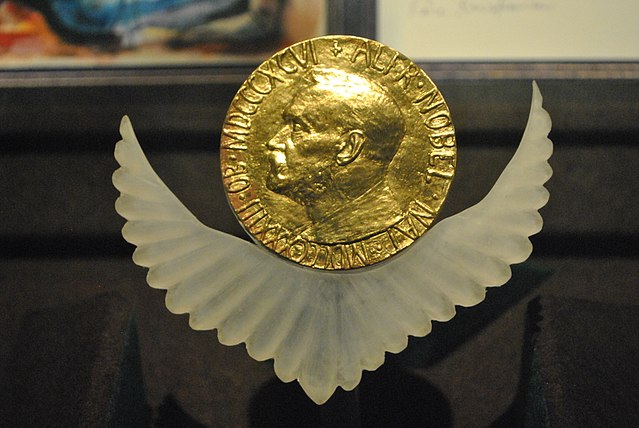
This was the dilemma facing Alfred Nobel. His name had become synonymous with destruction, his fortune forged in the laboratories of warfare. The creation of the Peace Prize was an act of alchemy—an attempt to transmute the legacy of dynamite into a legacy of peace. It was an effort to cleanse a name stained by the very violence it had enabled. In 2012, the Norwegian Nobel Committee performed a similar act of alchemy. It awarded its prestigious Peace Prize to the European Union. The justification was powerful and, on its surface, self-evident. The EU had turned a continent of war into a continent of peace. It had reconciled old enemies, embraced former dictatorships, and woven a tapestry of nations so interdependent that conflict had become not just unthinkable, but stucturally impossible. This is the story we tell ourselves, the "European miracle." And it contains a profound truth. But history is a palimpsest—beneath the surface of one narrative, older, more troubling scripts remain.
From its inception, the European project was not solely a utopian vision of internal harmony; it was also a pragmatic strategy for maintaining global relevance in a post-colonial world. The Treaty of Rome, while founding a common market, also institutionalised a special relationship with the colonial possessions of its member states, particularly France. This framework, often discussed under the banner of 'Eurafrica,' was about pooling influence. The official rhetoric was one of a civilizing mission, as captured in a statement from the nascent European Economic Community that proclaimed: "With increased resources Europe will be able to pursue the achievement of one of its essential tasks, namely, the development of the African continent." This framing of relations with Africa as Europe's "essential task" cast the continent in the role of a benevolent administrator, a stance that served to legitimize the strategic anchoring of African resources to European power.
This dual character—inward peace and outward influence—persists. Today, the EU’s most guarded borders are not between its members, but along its southern periphery. The same Union that abolished internal frontiers has built a formidable system of externalised control, relying on agreements with states like Turkey and Libya to manage migration. The language has evolved from Schuman's vision of global influence to the technocratic jargon of modern governance, but the underlying logic remains. As the EU itself frames it: "The effective management of the EU's external borders is a prerequisite for creating the EU area of freedom, security and justice." This official statement makes the connection explicit: the cherished internal freedom is structurally dependent on the rigorous management and control of the external "other." The legacy of projecting power to secure internal peace continues, just in a new vocabulary.
And so, we return to the Nobel Prize. In awarding the EU, did the committee honour the peace that is, or consecrate the peaceful ideal—washing away the complexities of the real? The prize, in a sense, performs a "cleansing" not unlike the one Nobel sought for himself. It takes an entity with a complex, sometimes contradictory record—a project born from war yet implicated in other forms of power and exclusion—and bathes it in the pure, untarnished light of peace. It legitimises not just what Europe has achieved, but what it has become. This is not to dismiss the EU’s achievement. The peace within its heart is real and precious. But the most enduring peace is not one that is built within a garden while guarding the gate. It is one that grapples with its own legacy, that recognises how the pursuit of internal harmony can create dissonance beyond its walls.
The true question posed by the EU’s Nobel Prize, then, is not whether it was deserved. It is what we choose to see when we look at it. Do we see a final reward for a finished project? Or do we see a mirror, reflecting both the luminous achievement and the lingering shadows—a reminder that the hardest part of building peace is not ending the wars of the past, but confronting the subtle violences of the present?