

[OSM-Plugin-Error]:width = u002295%u0022 is out of range [perc]!
[OSM-Plugin-Error]:zoom out of range!
[OSM-Plugin-Error]:u00226.0u0022
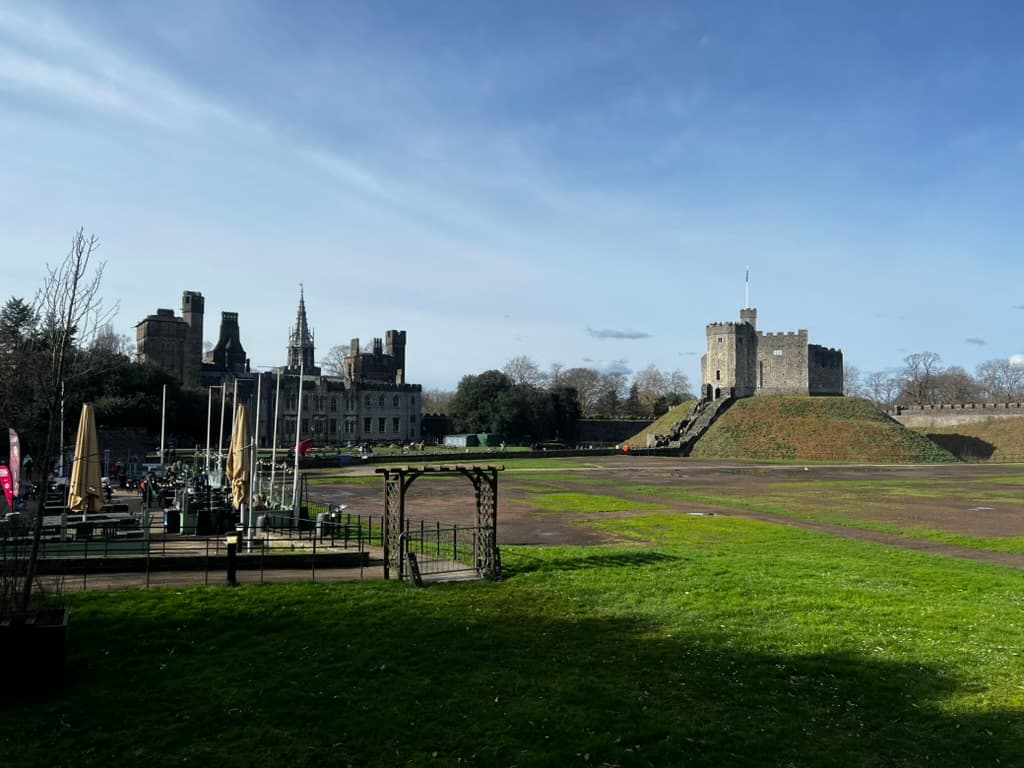
<!-- wp:divi/text {"module":{"decoration":{"layout":{"desktop":{"value":{"display":"block"}}}}},"content":{"innerContent":{"desktop":{"value":"\u003cstrong\u003ePlanning\u003c/strong\u003e\r\nAs part of my Master’s programme in Marine Geosciences, completing a “Geoscientific Project” is mandatory. Fortunately, we are free to choose the topic and location. Since I hadn’t spent time abroad during my studies yet and was keen to learn a new laboratory method, I decided to take this opportunity to go abroad.\r\n\r\nI reached out to Prof. Stephen Barker from the School of Earth and Environmental Sciences at Cardiff University. After a few emails, we agreed on a project that would be feasible within my three-month stay.\r\n\r\nApplying for Erasmus+ funding was straightforward and uncomplicated. The same applies to the ETA (Electronic Travel Authorization), which is required to enter the UK. Finding accommodation was also manageable. However, rents in Cardiff are significantly higher than in Bremen. I found my room via spareroom.com, where I rented a room in a newly renovated house close to the university. Living there was very pleasant and completely uncomplicated.\r\n\r\nOne minor challenge during the planning phase was that, shortly before my arrival, it turned out that I had to enrol as a visiting student at Cardiff University. However, after a few emails and some quick administrative steps during my first few days there, this issue was quickly resolved. Being a visiting student also had its perks, such as access to student discounts and university activities.\r\n\r\n\u003cstrong\u003eTravel to Cardiff\u003c/strong\u003e\r\nThere are several ways to travel to Cardiff. The city has its own airport, but flights from Germany often involve a layover (for example in Amsterdam). Alternatively, flying to London or Bristol and continuing by train or coach is a common option.\r\n\r\nSince I applied for the Erasmus+ Green Travel funding, I chose to travel by FlixBus. On the way to Cardiff, I had stopovers in The Hague and London, and we crossed the Channel by ferry from Calais to Dover. The total journey took about 25 hours. While that sounds long, most of the travel happened overnight, so I was able to sleep for a large part of it.\r\n\r\nThe return journey took around 22 hours, again including the ferry crossing. Although it may sound exhausting, the tickets were very affordable (around €90 for the outbound trip and €50 for the return). Another advantage was the flexibility with luggage, which was important for me. I also personally prefer not to fly, but of course, that comes down to individual preference.\r\n\r\n\u003cstrong\u003eWork Life\u003c/strong\u003e\r\nI was warmly welcomed by the research group and quickly felt integrated into the team. Working in the lab required several safety inductions and training sessions, which involved some waiting and organization at the beginning. However, once everything was set up, I could structure my working day quite independently.\r\n\r\nMy supervisors were always approachable and available whenever questions came up. Regular group meetings, held every two weeks, provided a great opportunity to present our work or discuss interesting topics in a relaxed and supportive academic environment. These meetings helped me improve my confidence in presenting in front of a professional audience.\r\n\r\nIn addition to the academic side, coffee breaks and occasional visits to the pub made it easy to connect with colleagues on a personal level. Overall, I felt very welcome throughout my stay.\r\n\r\n\u003cstrong\u003eSocial Life\u003c/strong\u003e\r\nCardiff has a lot to offer, especially for students. With my student status, I was able to join sport clubs and societies through the university’s Student Union. There is a wide range of options for almost any interest, and they are all organized by students.\r\n\r\nI joined the mountaineering club, which met twice a week for climbing sessions at local climbing gyms and organized outdoor climbing trips on weekends. They also offered mentoring sessions to help improve skills and learn new techniques. These clubs are not only a great way to meet like-minded people, but also to try out new activities. Many of them offer discounted memberships for Erasmus students, which are definitely worth it.\r\n\r\nBeyond university life, Cardiff itself is a very lively and welcoming city. It is easy to explore on foot, although I would recommend getting a bike for more flexibility. Public transport is available, including train connections that make it easy to visit nearby beaches or explore the surrounding area. If you have access to a car (or know someone who does), I highly recommend visiting the Brecon Beacons National Park, which is only about a 45-minute drive away and perfect for hiking.\r\n\r\nPubs play an important role in social life in Cardiff. They are great places to meet people, play games like pool or darts, and enjoy live music. In general, I found people in Cardiff to be very open and friendly. It’s easy to start conversations and make new friends.\r\n\r\nThe city also offers plenty of attractions, such as Cardiff Castle, Cardiff Bay, and the indoor market. There is always something to do, and even after three months, I still hadn’t seen everything.\r\n\r\nOne small tip: if possible, plan your stay for the summer months. During my time from February to May, it rained almost every day for the first half of my stay. Something you should definitely be prepared for in Wales!\r\n\r\n
\r\n\r\n
"}}},"builderVersion":"5.0.0-public-beta.1"} /-->
Neueste Kommentare