In Bremen, many people were active in the anti-apartheid movement. The “South Africa – Women” group of the „Evangelische Frauenhilfe“ (Protestant Women’s Aid) in Bremen attracted public attention. Heinz Gustafsson dedicated his book Bremens Anteil an Südafrikas Geschichte (Bremen’s Role in South Africa’s History), published in Oldenburg in 2018, to these women. He describes their actions and presents many images. For this work, he also collaborated with former activists.
Furthermore, extensive materials are accessible in Bremen: at the Bremen State Archives and the Bremen Regional Church Archives. The Archive Information System for Lower Saxony and Bremen provides options for searching these materials.

Additionally, material is also held in the Archive of the German Women’s Movement in Kassel. The women who were active at the time deposited copies of their collections there. This means the women themselves took steps to ensure their engagement would not be forgotten. At the same time, they also followed the practice of archives in selecting what to preserve.
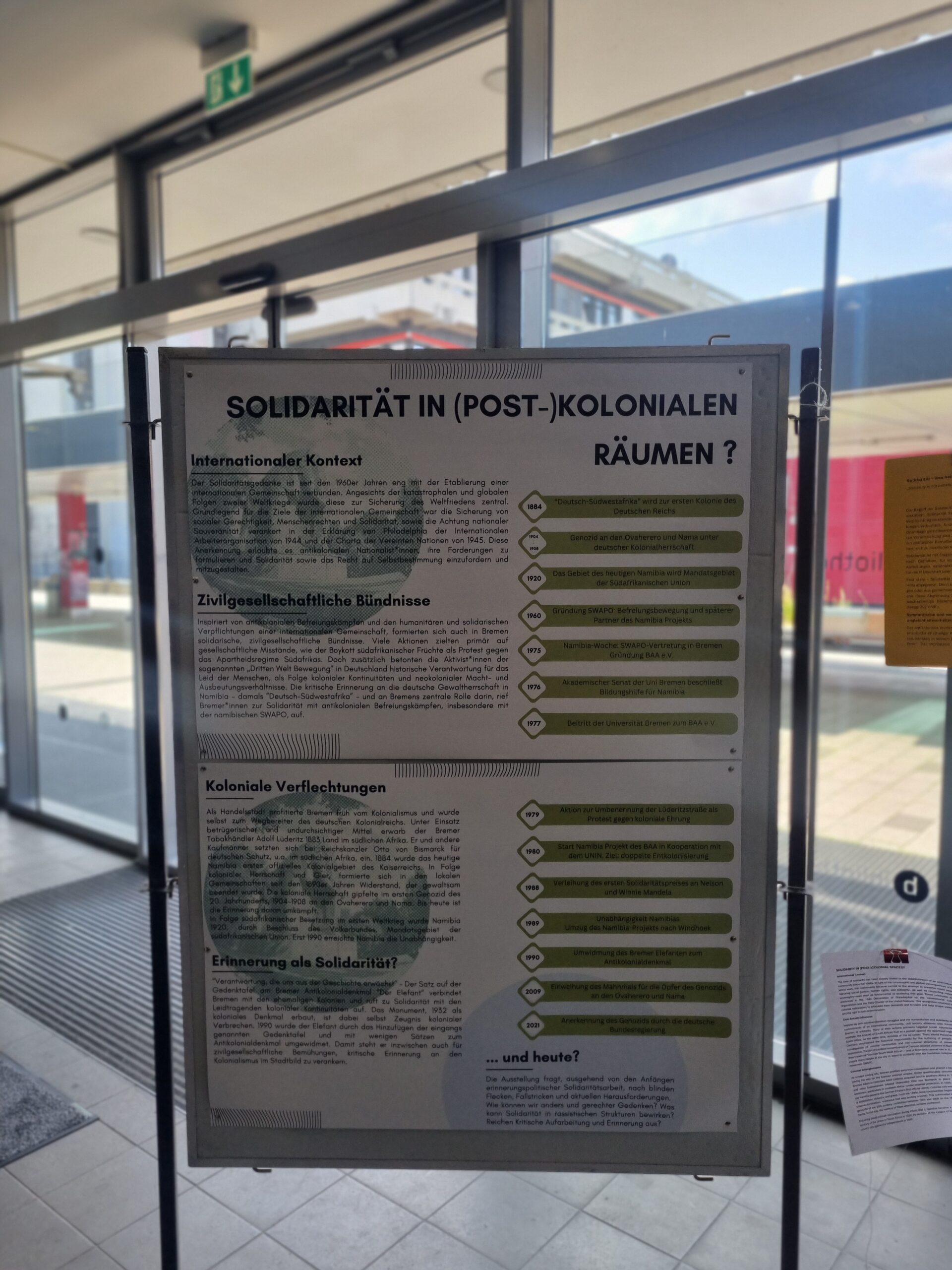
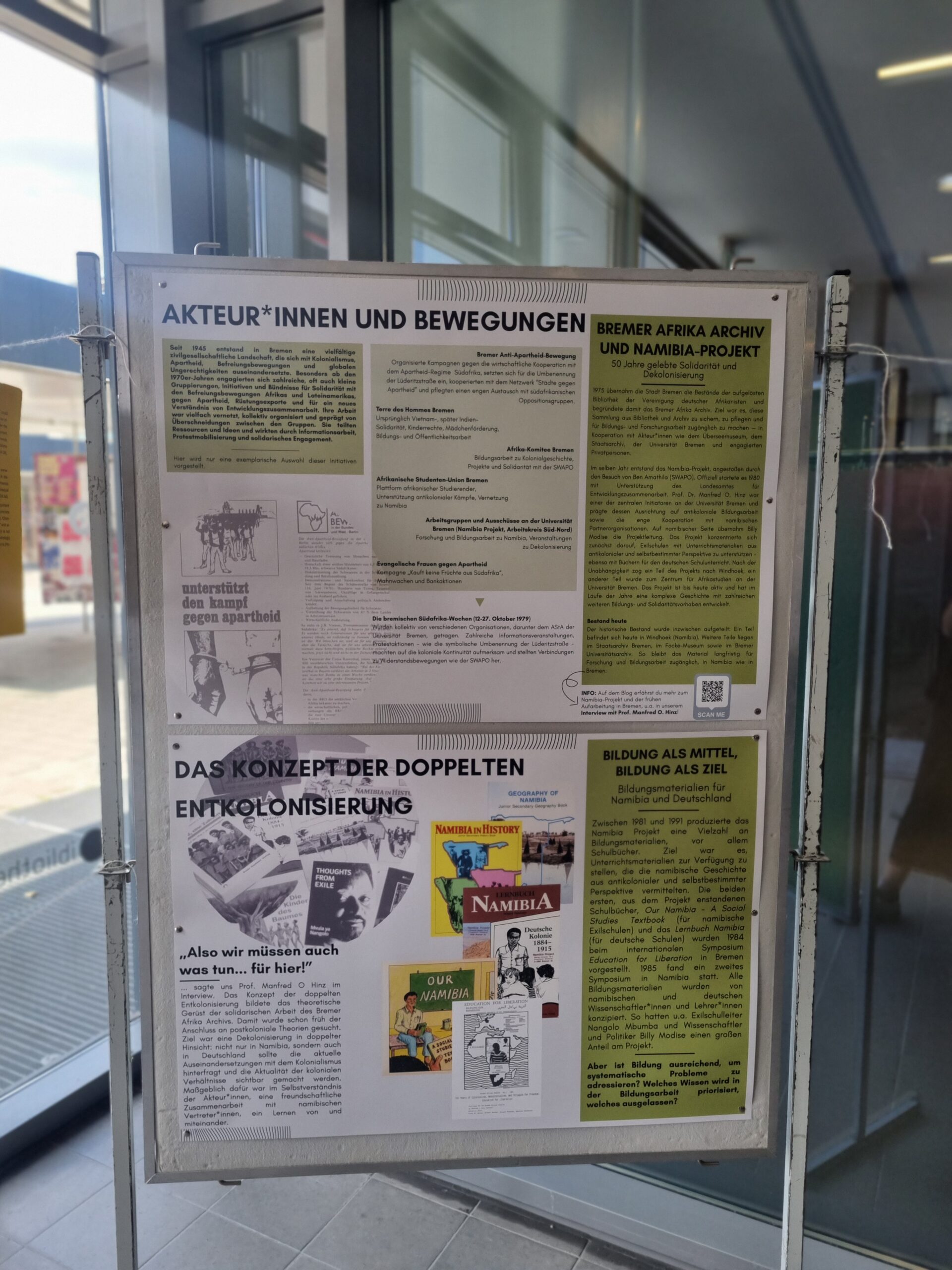
The Bremen anti-apartheid movement included many other actors, associations, and initiatives. These include the Anti-Apartheid Movement Bremen and, later, the second Anti-Apartheid Movement Bremen Umland. Other groups involved were the Bremen Information Center for Human Rights and Development, the Third World House, the association “Solidarity from People to People,” the IGM Youth, the choir “Zeitgenossen,” members of political parties, and the Bremen Africa Archive. Many actions were carried out jointly. Apartheid was also discussed in the Bremen Senate, and Bremen was declared an anti-apartheid city.
Materials on these activities can also be found in the Bremen State Archives and in the Archive for Alternative Literature in Duisburg. In Duisburg, the holdings of the Anti-Apartheid Movement, preserved by the federal office in Bonn, can already be viewed online. Additionally, the archives of Bremen newspapers, the TAZ Bremen edition, and Radio Bremen often allow for online research.
The Archive of Social Movements in Bremen contains documents from social movements and struggles of the last 30 years. These include magazines, books, brochures, posters, and memorabilia. According to its own statements, the archive aims to provide current initiatives with connections to past experiences, thereby enabling theoretical and practical continuity in political action.
In the archive of belladonna—Culture, Education, and Economy for Women e.V.—initiatives and activities of women and FLINTA* are documented. It sees itself as a living memory of Bremen’s women’s history and movement.