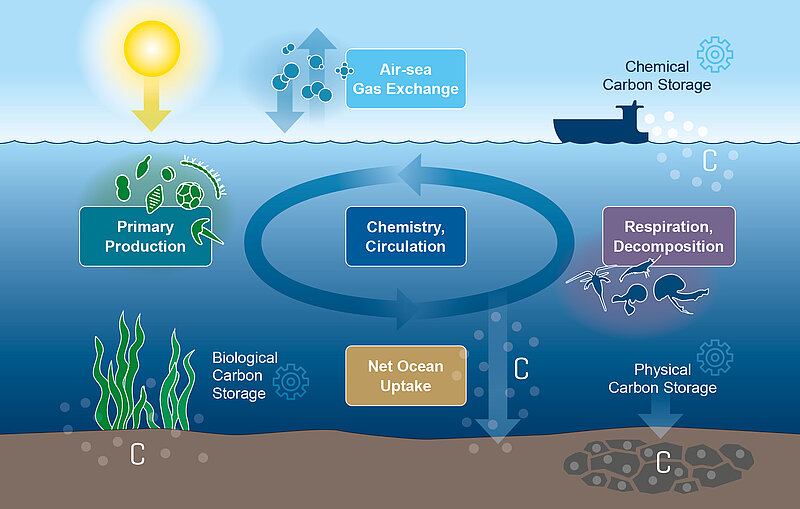
FLAPS is a simple way to remember how microbes shape marine food webs and the carbon cycle.It stands for Fungi, Labile DOM, Aggregates, Parasites, and Sinks. It’s a conceptual shortcut used by some marine ecologists to highlight processes that classic “phyto, zooplankton, fish” diagrams often ignore, but which strongly control what happens to carbon in the ocean.
Fungi in the sea were long overlooked, but they can decompose tough organic material and infect algae and zooplankton. By breaking particles apart or killing their hosts, they change whether carbon is recycled near the surface or packaged into sinking material. Labile dissolved organic matter (DOM) is the easily degradable fraction of carbon released by phytoplankton, sloppy feeding, and viral lysis. Bacteria rapidly consume this labile DOM and respire it back to CO₂, short circuiting export to depth. Aggregates often called “marine snow” form when cells, mucus, and detritus stick together. These sticky clumps sink much faster than single cells, making them an important pathway that sends surface carbon into the deep ocean. Parasites (including eukaryotic parasites and viruses) kill hosts across the microbial community. Their victims leak DOM and fragments that feed bacteria and help build aggregates. Finally, Sinks refer to the physical loss of carbon from the surface, fast‑sinking particles, fecal pellets, and subduction of water masses.
Thinking in terms of FLAPS helps connect invisible microbial processes to big picture questions: how much carbon the ocean stores, how food webs are structured, and how sensitive these systems are to climate change.