
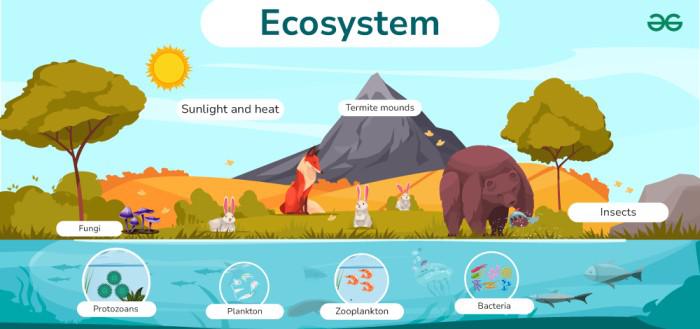
Scientists study nature to understand how ecosystems function. This function can be studied by looking at how living things and their environment interact.
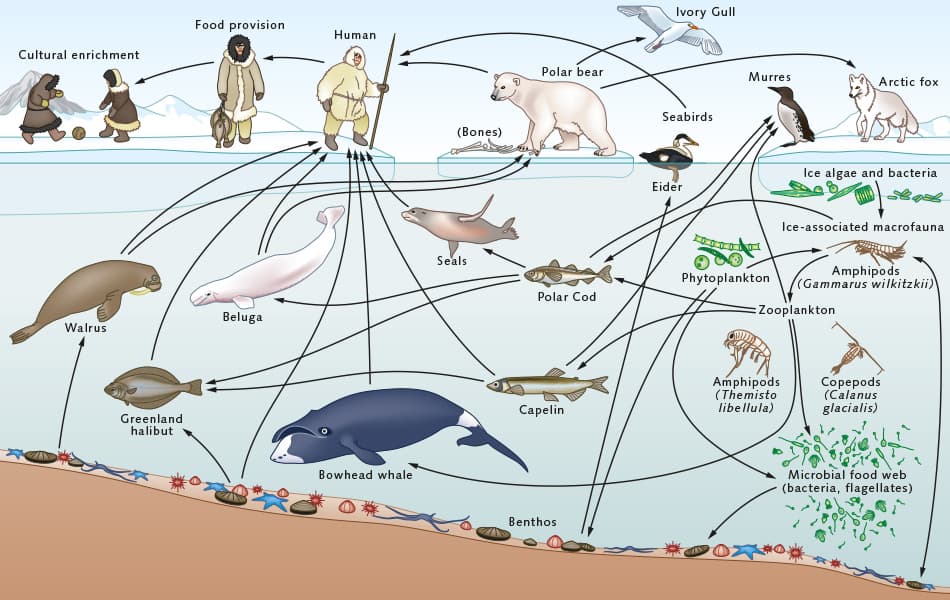
For example, how energy moves through food chains. In the Arctic Ocean lives a small fish called the polar cod. It eats tiny plankton, and bigger animals like seals, seabirds, and whales eat the polar cod. This helps move energy through the ecosystem and keeps the Arctic food web balanced.
Scientists also study animal traits, such as body size, feeding habits, or how animals reproduce. These traits help scientists understand how species affect ecosystem functions. Sometimes one study is not enough to understand nature. Different scientists study different places, animals, and conditions. To see the bigger picture, scientists use something called a meta-analysis. A meta-analysis means collecting results from many studies and putting them together to find patterns that cannot be seen in only one experiment.
But doing a meta-analysis is not always easy. Scientists may measure things in different ways; some results may be missing; and studies can be conducted in different environments. This makes it harder to compare the studies and see the full picture.
However, by studying traits, ecosystem functions, and many studies together, scientists can better understand how ecosystems work and how to protect them.

Welldone Gretel. Your blog was well written. I think there’s a very little detail about meta analysis in it however. Amazing images.